"Our guide was very funny and knowledgeable. Having someone share the history behind what we were looking at the entire tour was worth every dollar spent! He did a great job! My wife who is not a history person at all even enjoyed herself!"
Athens · Greece · UNESCO World Heritage
The Parthenon of Athens: Reading Athena's Temple Stone by Stone
Stand before the Parthenon — the 5th-century-BC Doric temple of Athena — with a licensed expert guide. Skip the ticket line at the Acropolis and, if you wish, see the original marbles in the Acropolis Museum.
From
$39
per person
Free cancellation
- 4.7 / 5 6340+ Reviews
- 2 hours Duration
- Skip the Line Entry Included
- Expert Guide Licensed Local
- Free Cancellation
The Experience
What a Guided Parthenon Tour Adds
The temple is roped off, the rock is steep, and signage is sparse — here's what a licensed local guide and a skip-the-line ticket bring to your visit to the Parthenon.
Highlights
- Unlock the secrets of the Acropolis with an engaging local guide
- Learn the history of the classical world with an archaeologist guide
- Snap epic photos from Athens’ most iconic viewpoints
- Skip the lines and maximize your time exploring
- Connect ancient wonders with the vibrant energy of modern Athens
What's Included
- Tour with an expert licensed guide
- Wireless hearing devices are included (to hear your guide clearly at all times)
- Guided tour of the Acropolis monuments, the Parthenon, and the Acropolis Museum (only if the option selected - English version)
- Skip-the-line entry to the Acropolis Museum (only if the option with the Acropolis Museum selected - English tour)
- Skip-the-line entrance tickets (if the option with tickets is selected)
- Entry ticket to the Acropolis (if option is selected)
- Entrance tickets • There are two options: you can either buy the ticket on line from the official web site or pre-buy them as an option - we strongly suggest to buy options with tickets cause is very common not to find available entrance tickets.
- Convenient meeting point
- Meeting point is just 2 two-minute walk from the Acropolis metro station at Porinou 5, 11742
How a Guided Parthenon & Acropolis Tour Works
Four simple steps from the foot of the sacred rock in Athens up to the Parthenon and, if you choose, the Acropolis Museum.
Meet Your Guide Below the Acropolis
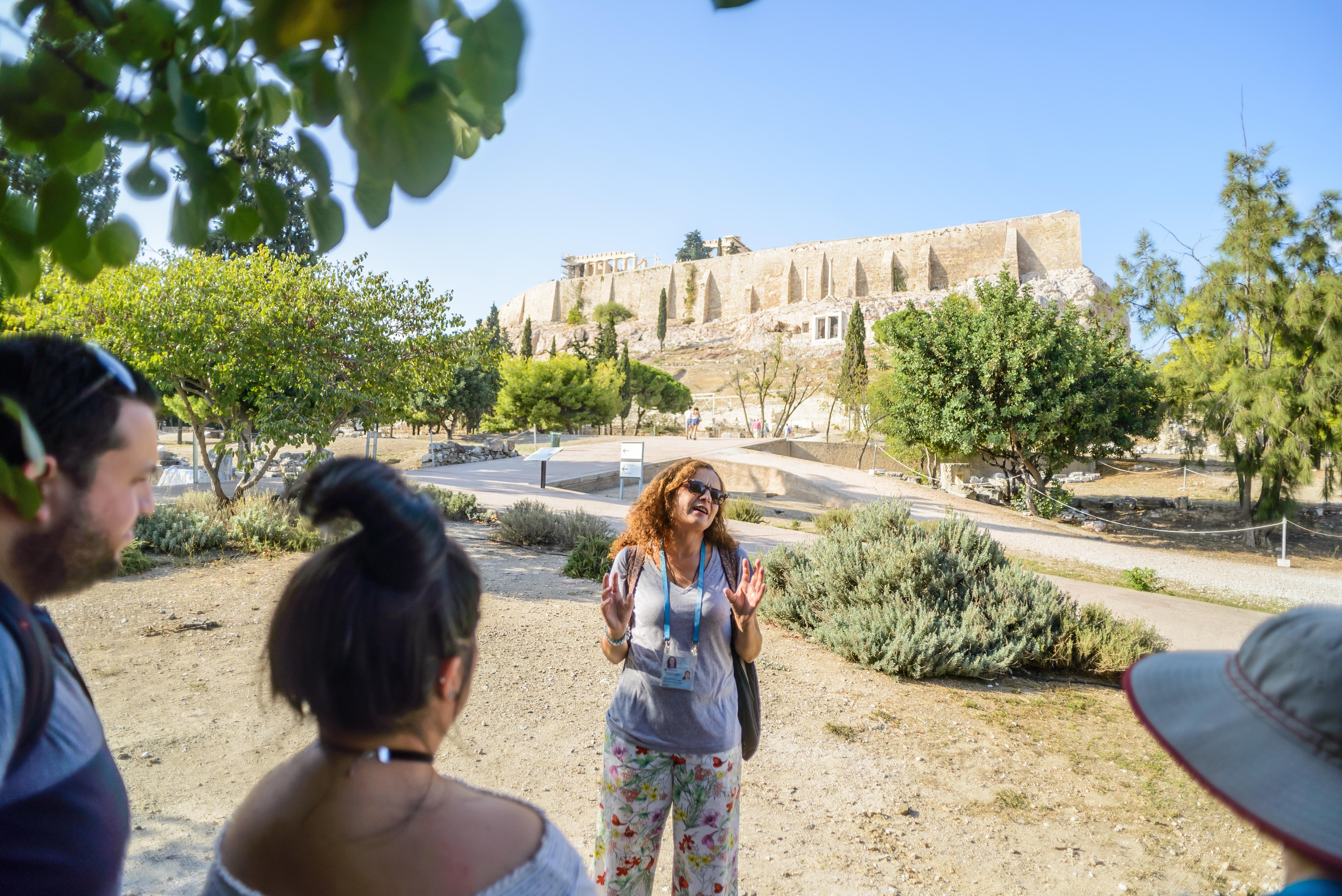
Meet your licensed local guide at the agreed meeting point near the entrance to the Acropolis in Athens. Your skip-the-line ticket is arranged for you, so there's no ticket-office queue to join.
Climb Up Through the Propylaea
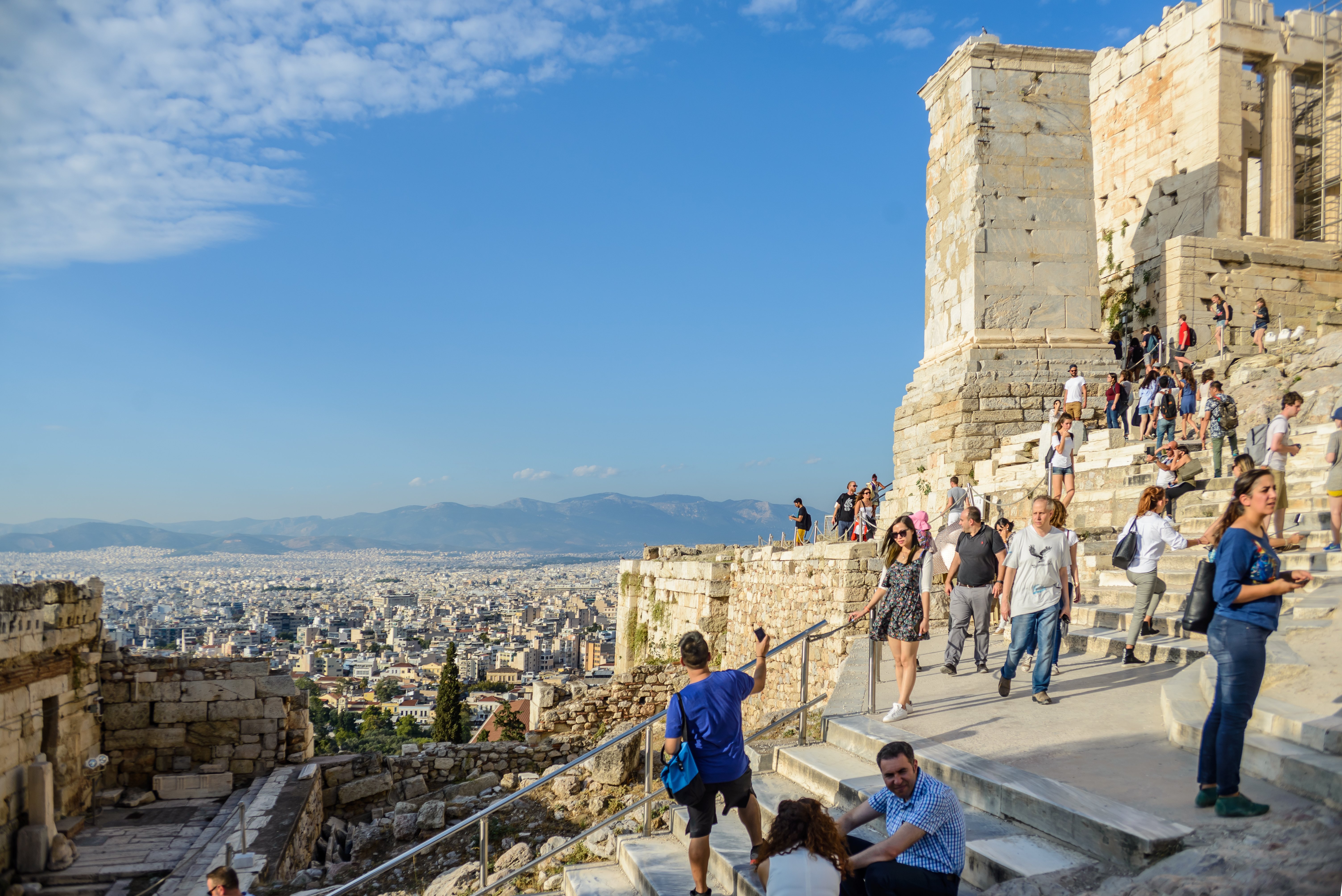
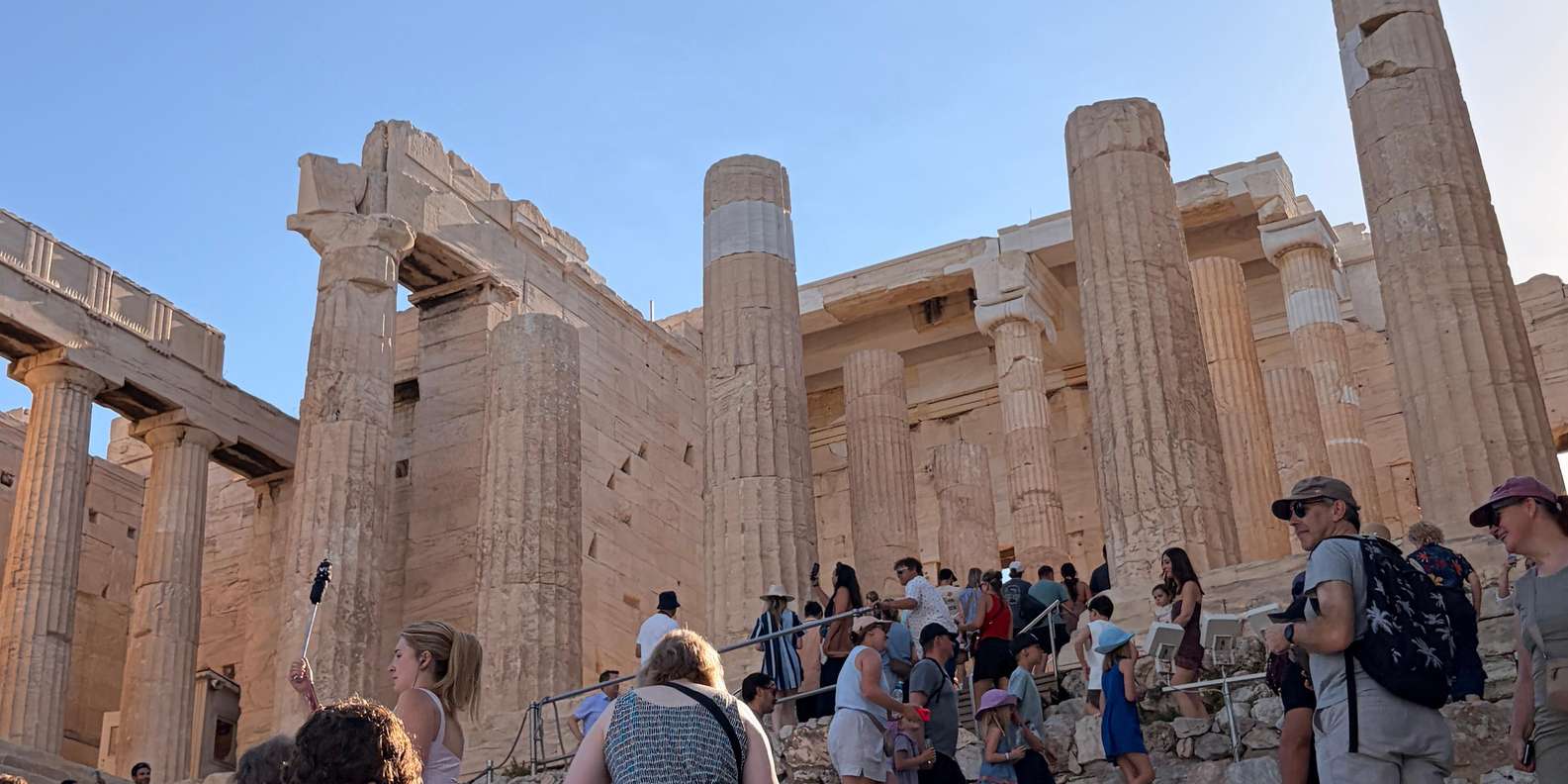
Walk up the sacred rock and pass through the Propylaea, the monumental marble gateway, with the little Ionic Temple of Athena Nike perched above you on its bastion.
Stand Before the Parthenon
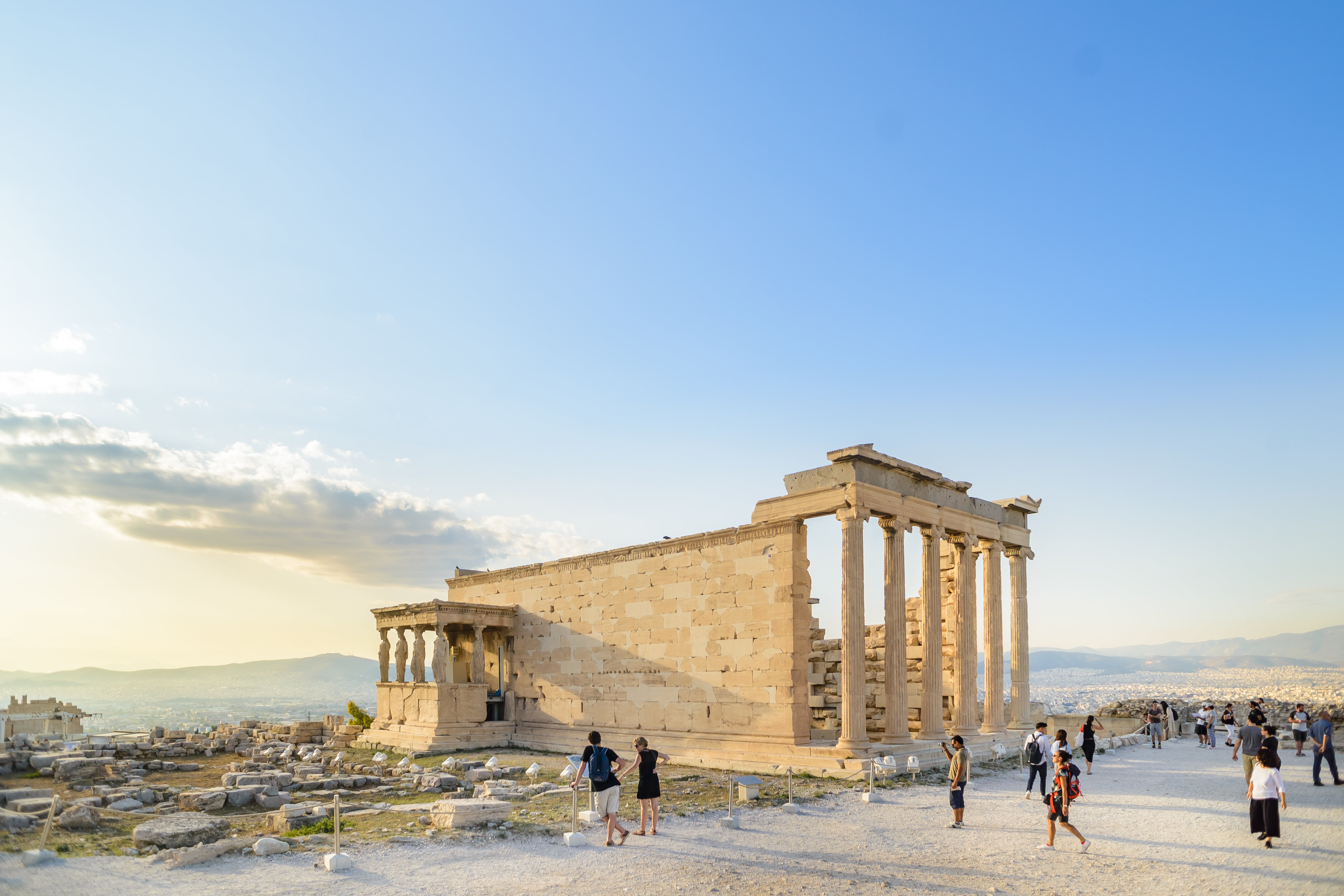
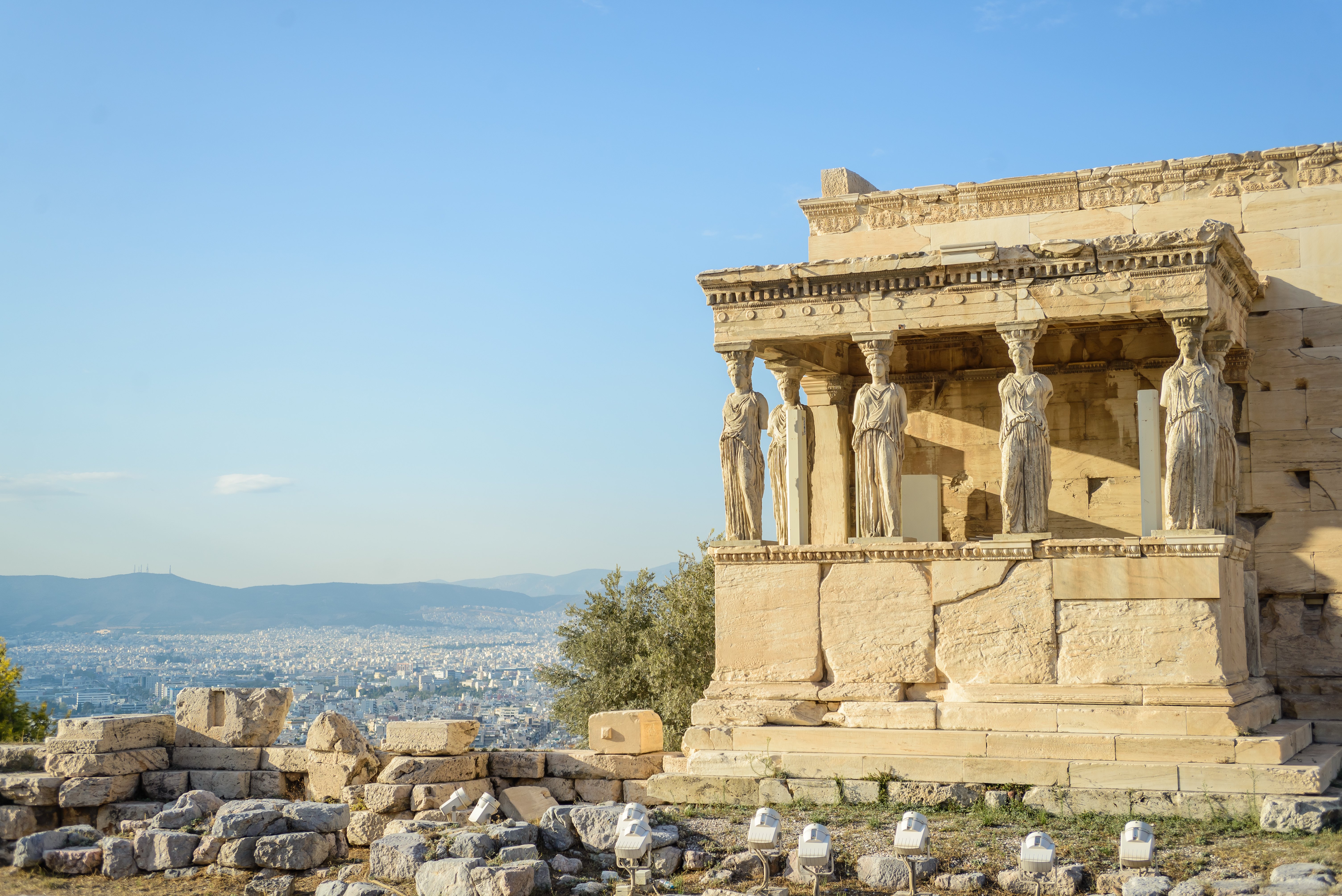
Reach the summit and the Parthenon itself — Athena's great Doric temple — as your guide reads its columns, metopes, and frieze, then circle to the Erechtheion and its Porch of the Caryatids.
Continue to the Acropolis Museum
If your tour includes it, finish at the award-winning Acropolis Museum below the hill, where the original Parthenon sculptures and frieze are displayed in natural light.
Photo Gallery
The Parthenon & Acropolis — Through the Lens
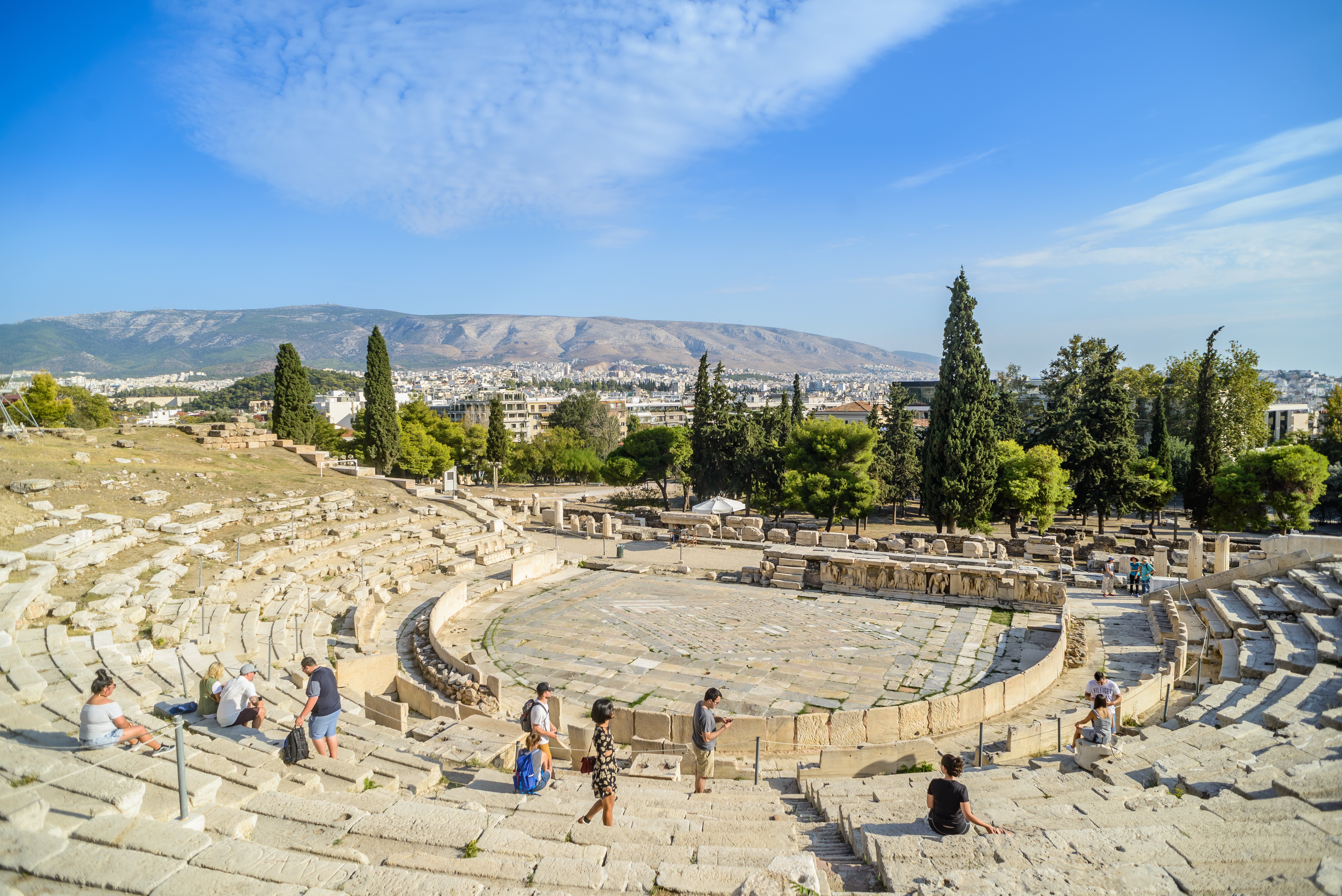
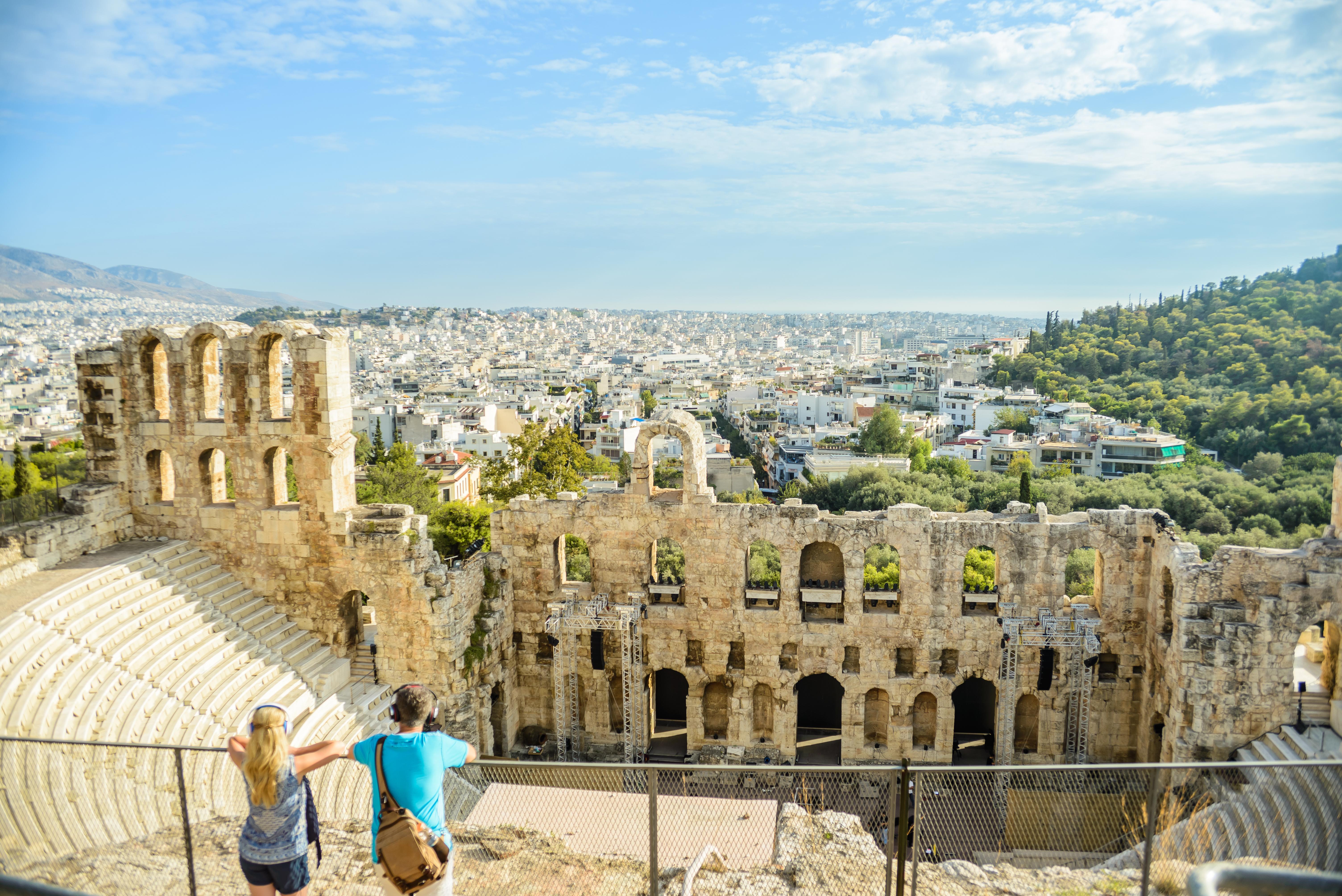
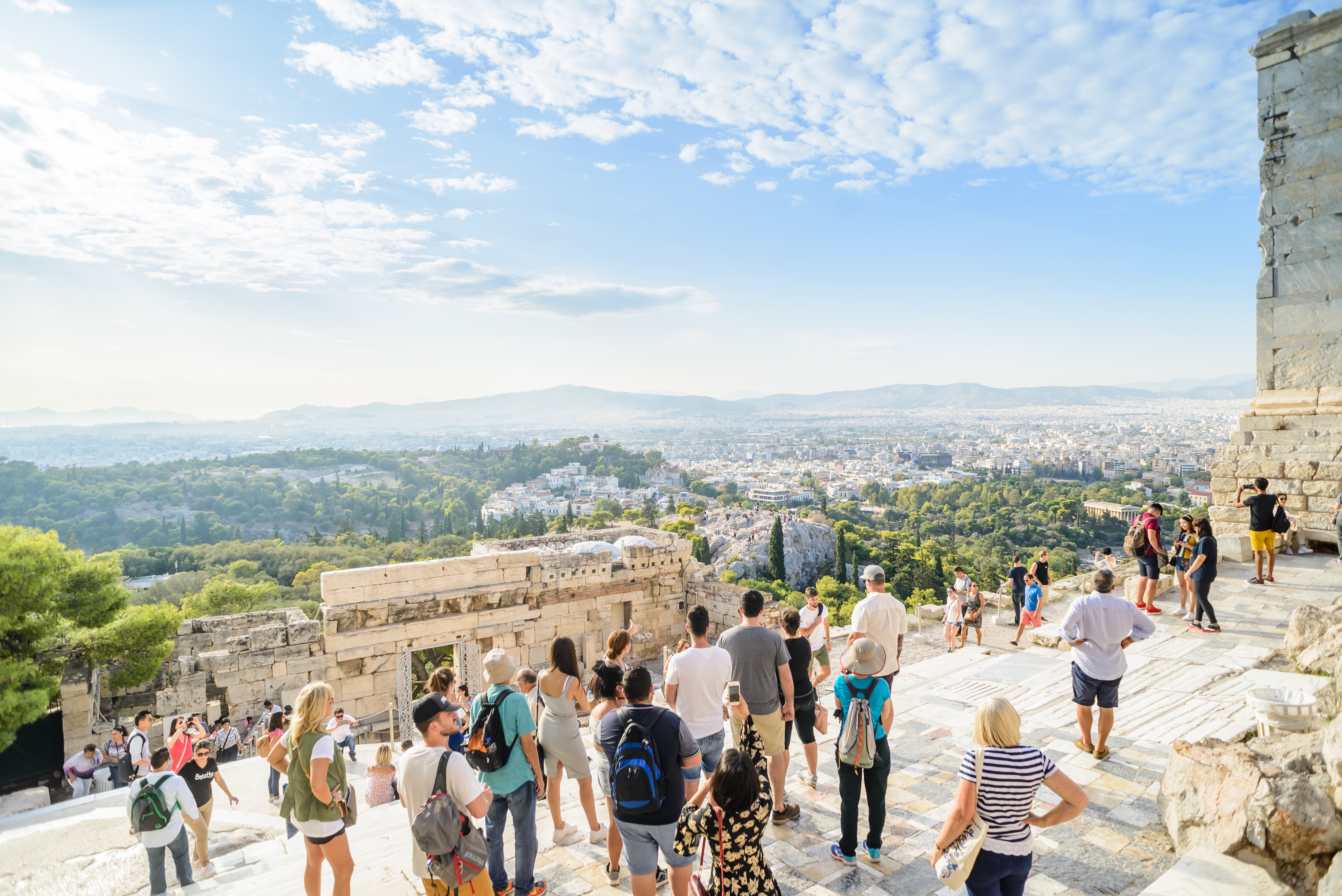
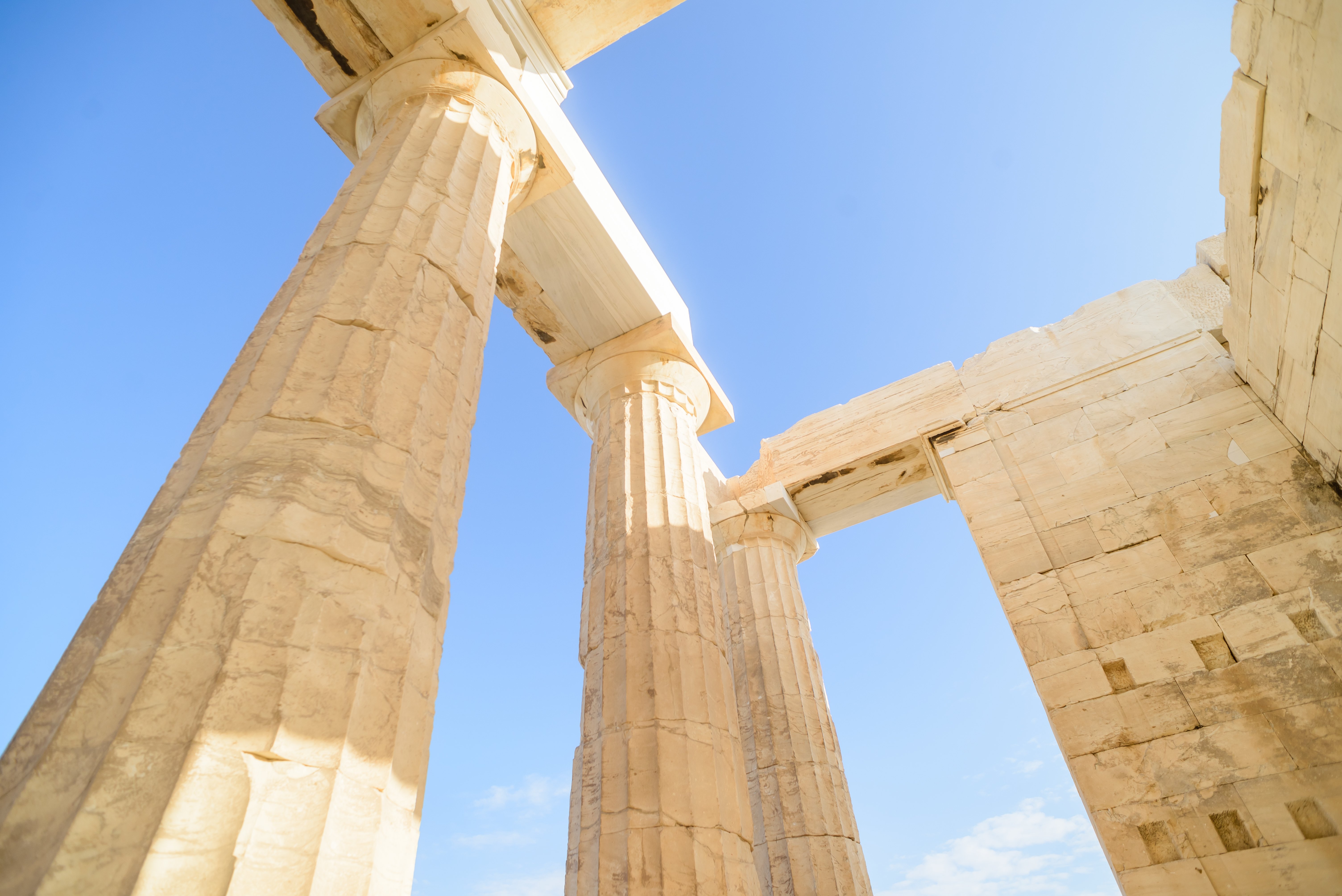
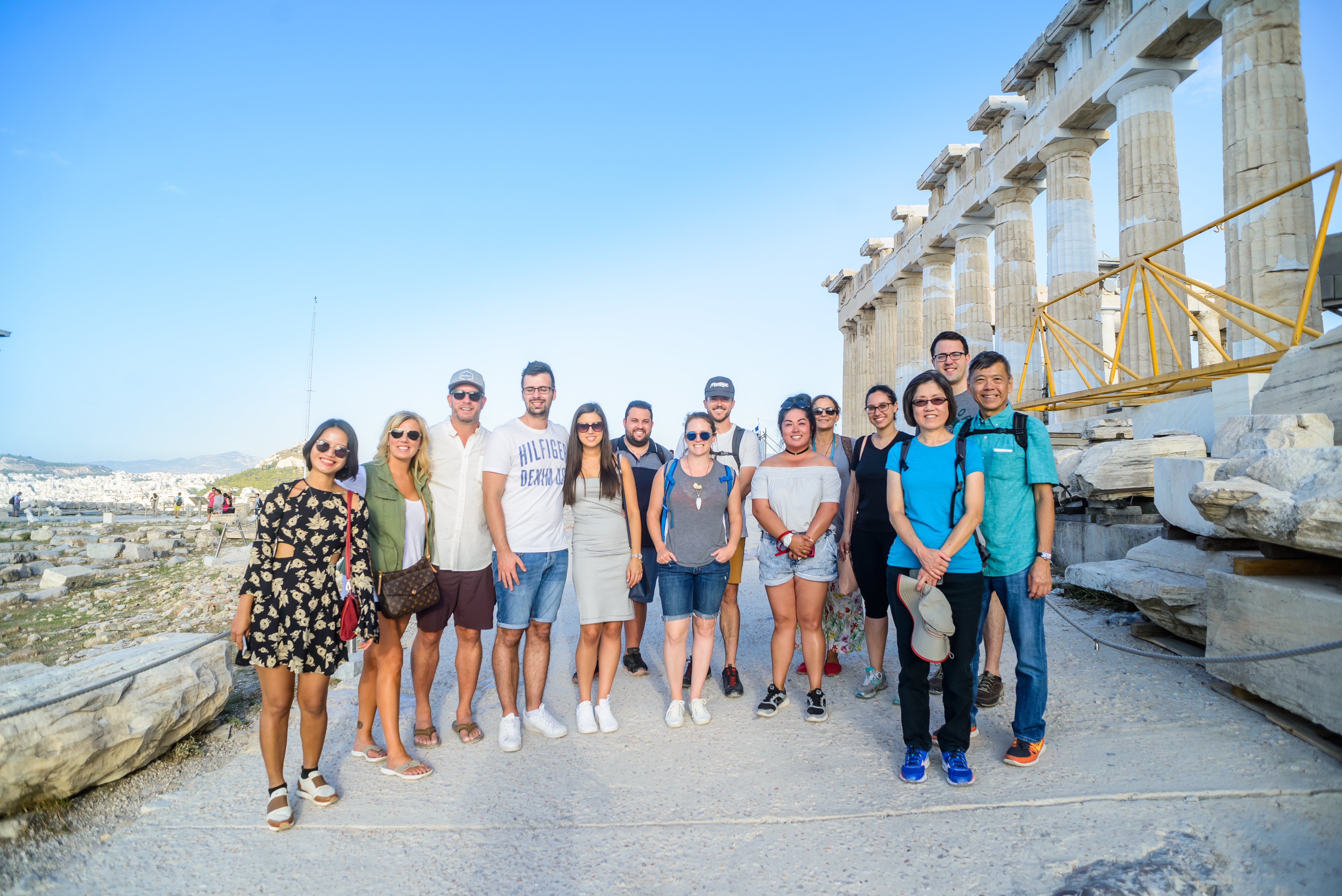
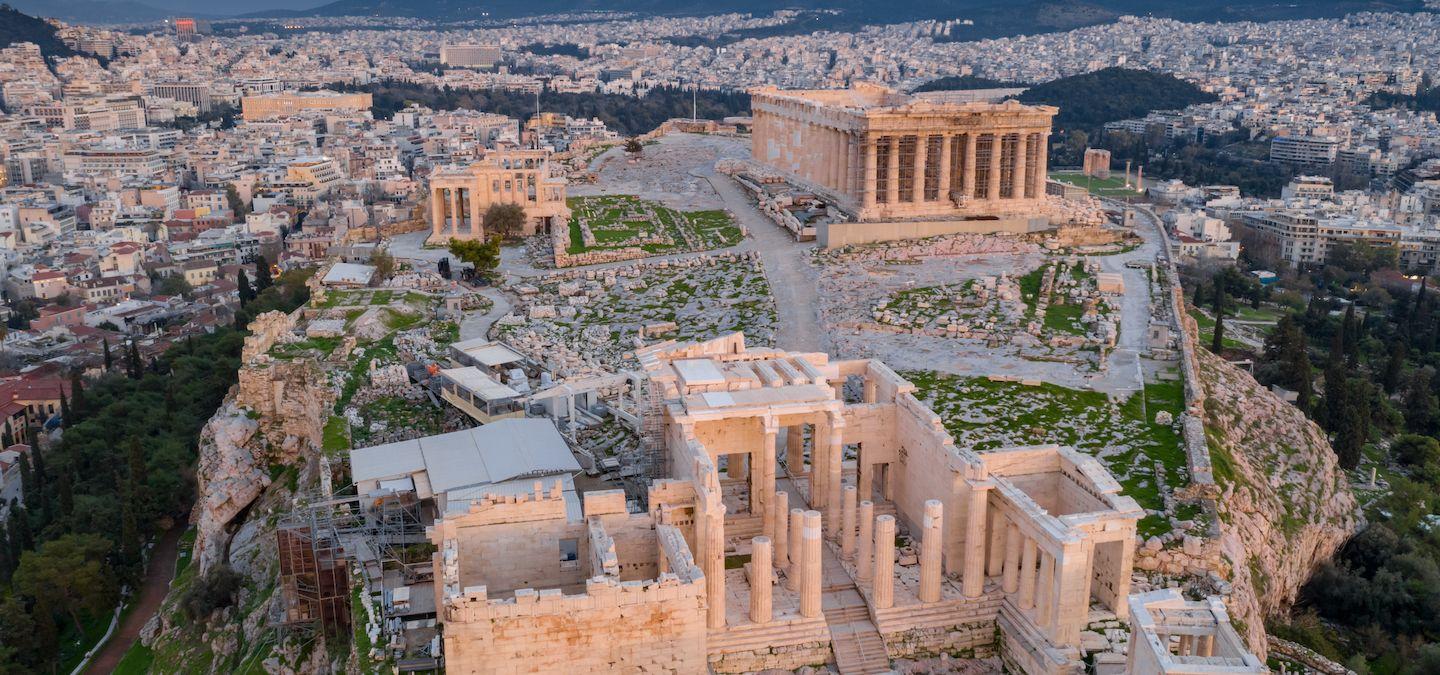
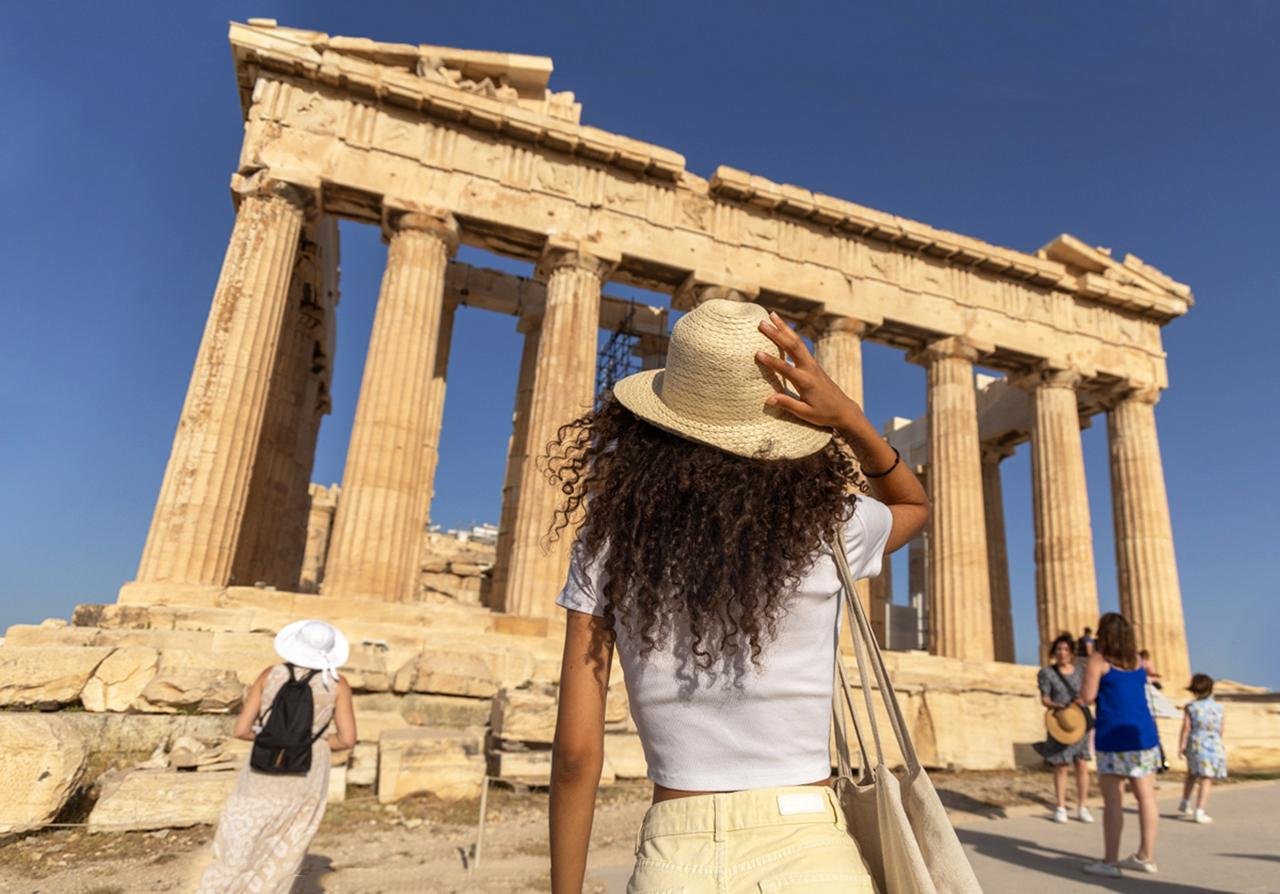
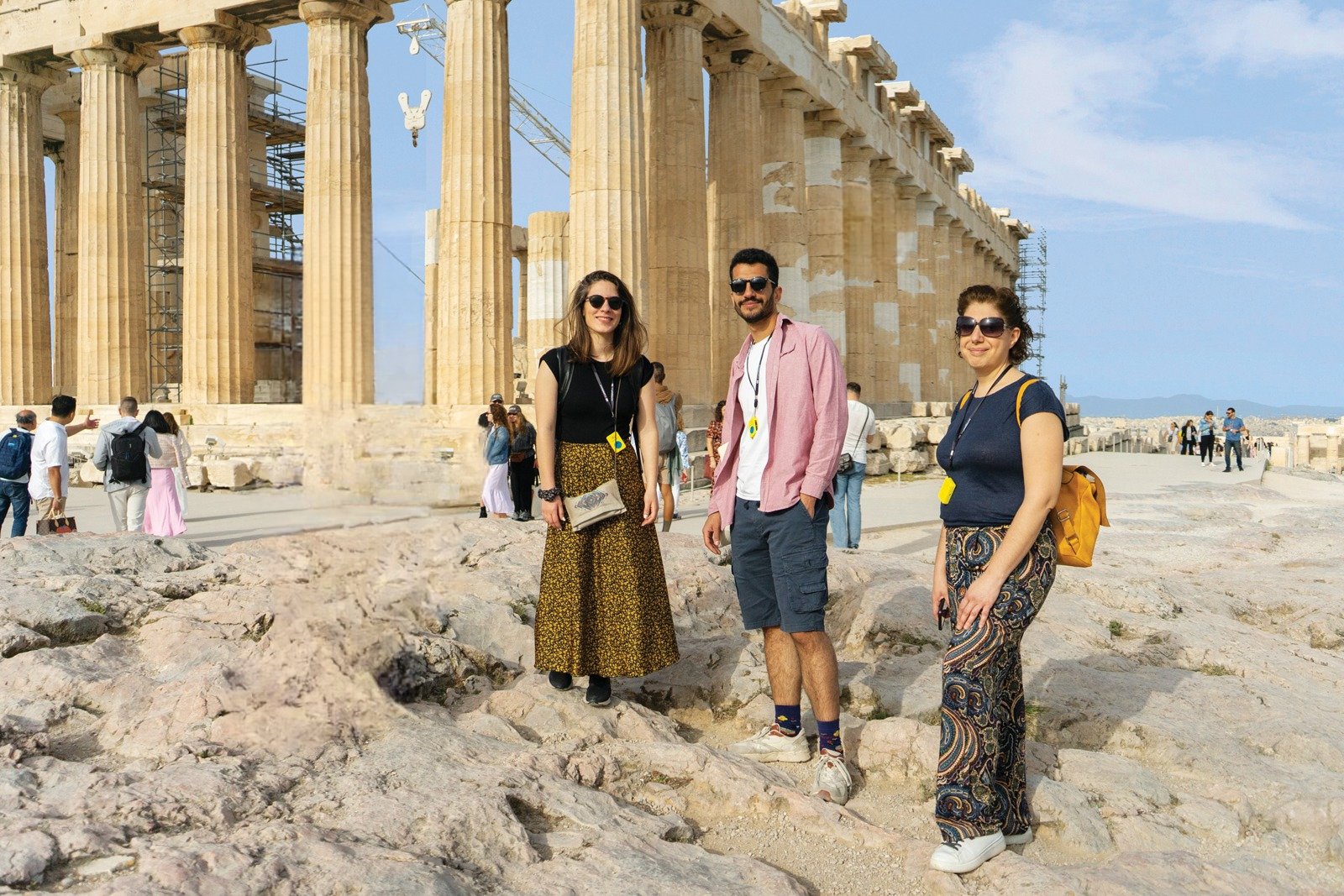
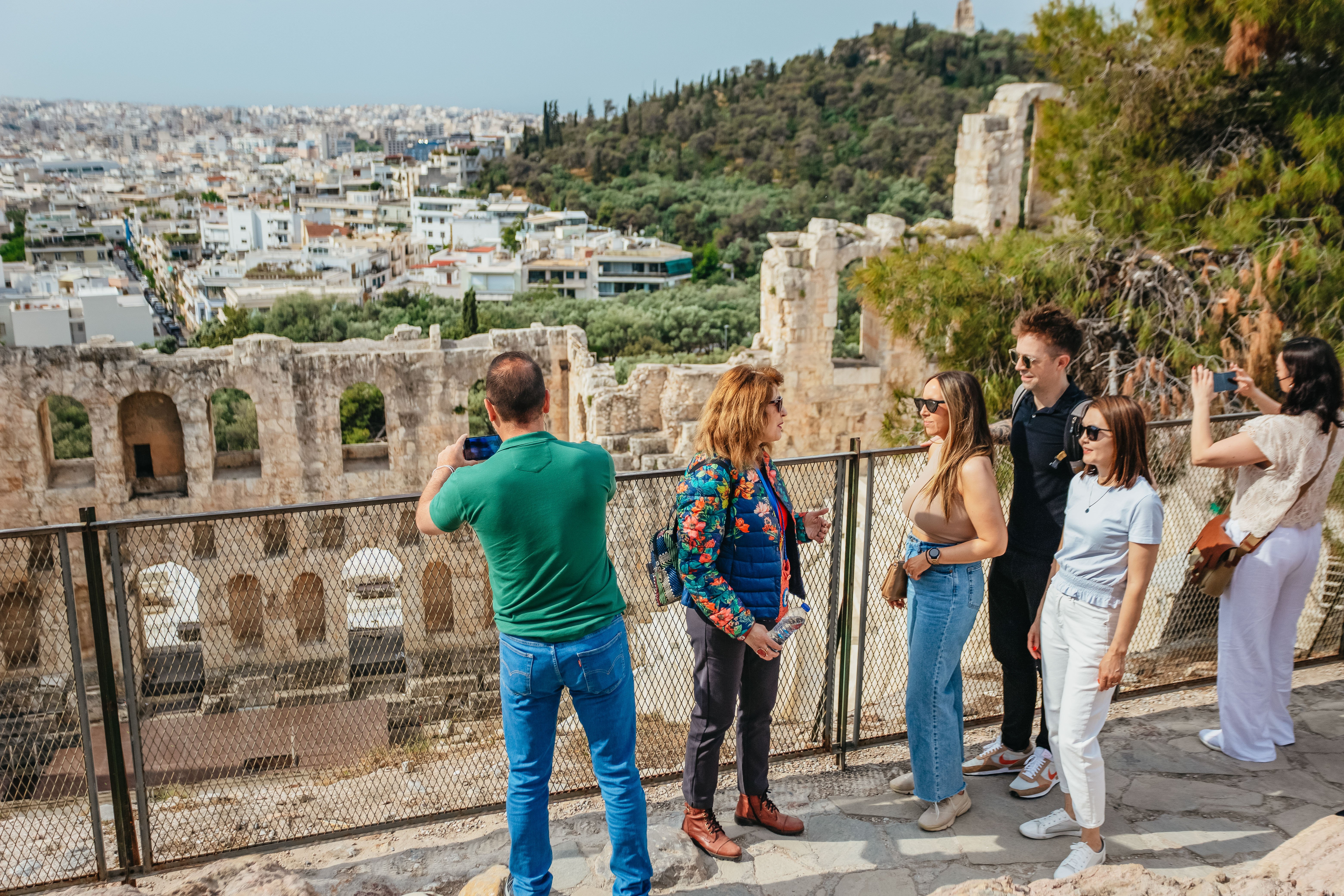
The Doric columns of the Parthenon against the Athens sky, the temple frieze and pediments, the Caryatids of the Erechtheion, and the view from the sacred rock.






Book Your Experience
Check Availability & Prices
Select your preferred date and time. Instant confirmation — free cancellation up to 24 hours before departure.
Guided Tour vs. Plain Ticket at the Acropolis
The Acropolis is steep, crowded, and light on signage — here's how a skip-the-line guided tour compares with going in on a self-purchased entry ticket.
| Feature | EASIEST Skip-the-Line Guided Tour | Acropolis Ticket (Direct) | Guided Tour + Acropolis Museum |
|---|---|---|---|
| Entry to the Site | Skip-the-line Acropolis ticket included | You buy and carry your own entry ticket | Acropolis + museum tickets included |
| Expert Guide | ✓ Licensed local guide tells the story of the Parthenon | No guide — you explore on your own | ✓ Licensed guide on the rock and in the museum |
| Acropolis Museum | Optional add-on on many departures | Separate ticket, visited on your own | ✓ Guided museum visit included |
| Skip the Ticket Line | ✓ Bypass the ticket-office queue | Queue at the ticket office (long in summer) | ✓ Bypass the queue at both sites |
| Pace | ~2 hours guided, then free time to linger | Fully flexible — stay as long as you like | ~3 hours guided across rock and museum |
| Best For | First-timers who want the history brought to life | Independent travelers on a budget | Travelers who want the full classical-Athens story |
| Heat & Shade | Guide paces the climb; ask about early or late slots | You manage your own timing — go early or late | Air-conditioned museum gives a break from the sun |
| Free Cancellation | ✓ Up to 24 hours before | Depends on where you buy | ✓ Up to 24 hours before on most combos |
| Starting Price | From $39/per person | Official adult entry (check current price) | From $40/person (guide + museum) |
| Check Availability | See the Combo |
More Options
Compare Parthenon & Acropolis Tours
Skip-the-line guided walks, small-group archaeologist tours, first-access early entry, and Acropolis Museum combos. All with free cancellation and instant confirmation.
 MOST POPULAR
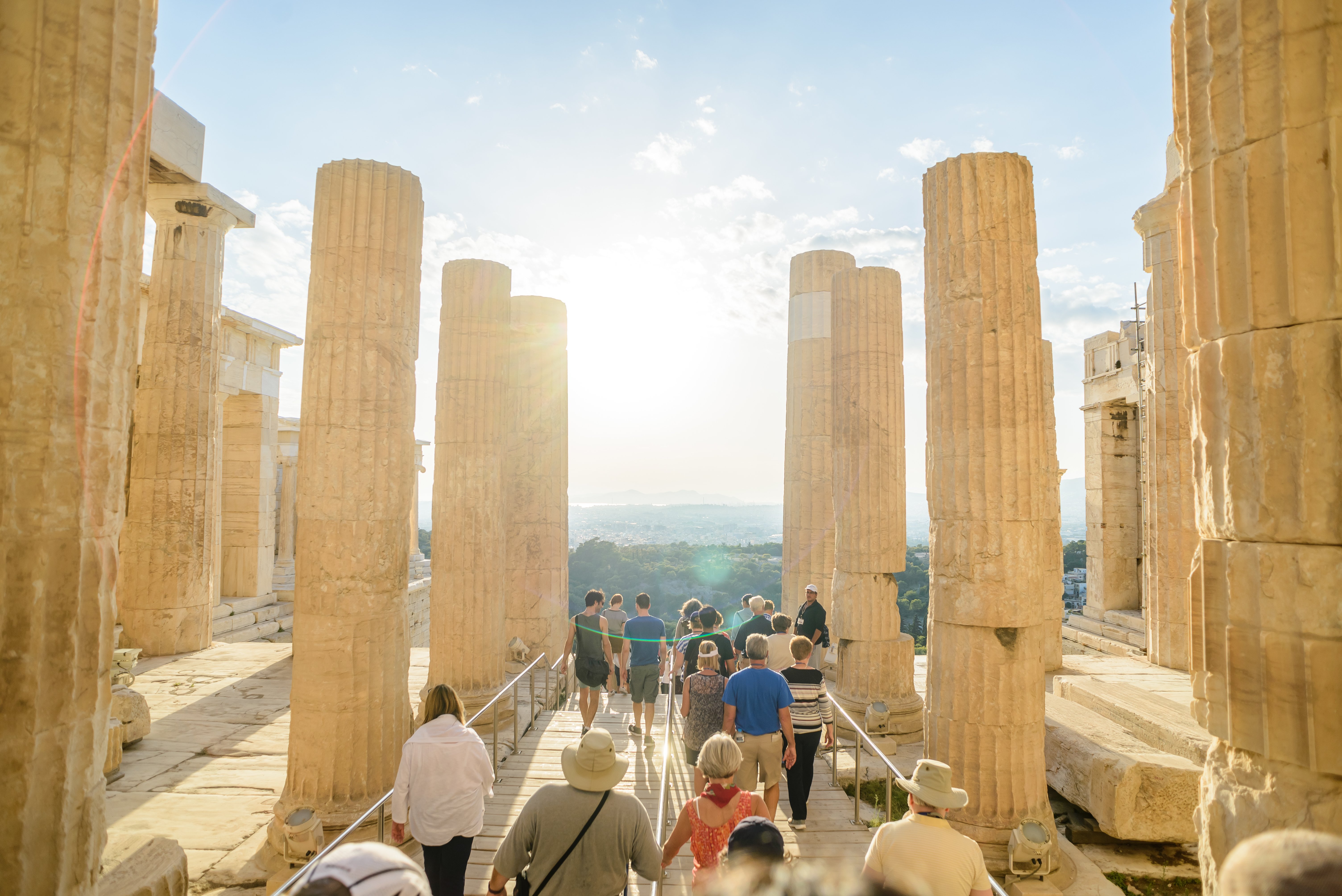
Acropolis: Premium Acropolis and Parthenon Guided Tour
A premium small-group tour of the Acropolis and Parthenon led by an archaeologist guide who brings the history of classical Athens vividly to life.
 WITH MUSEUM
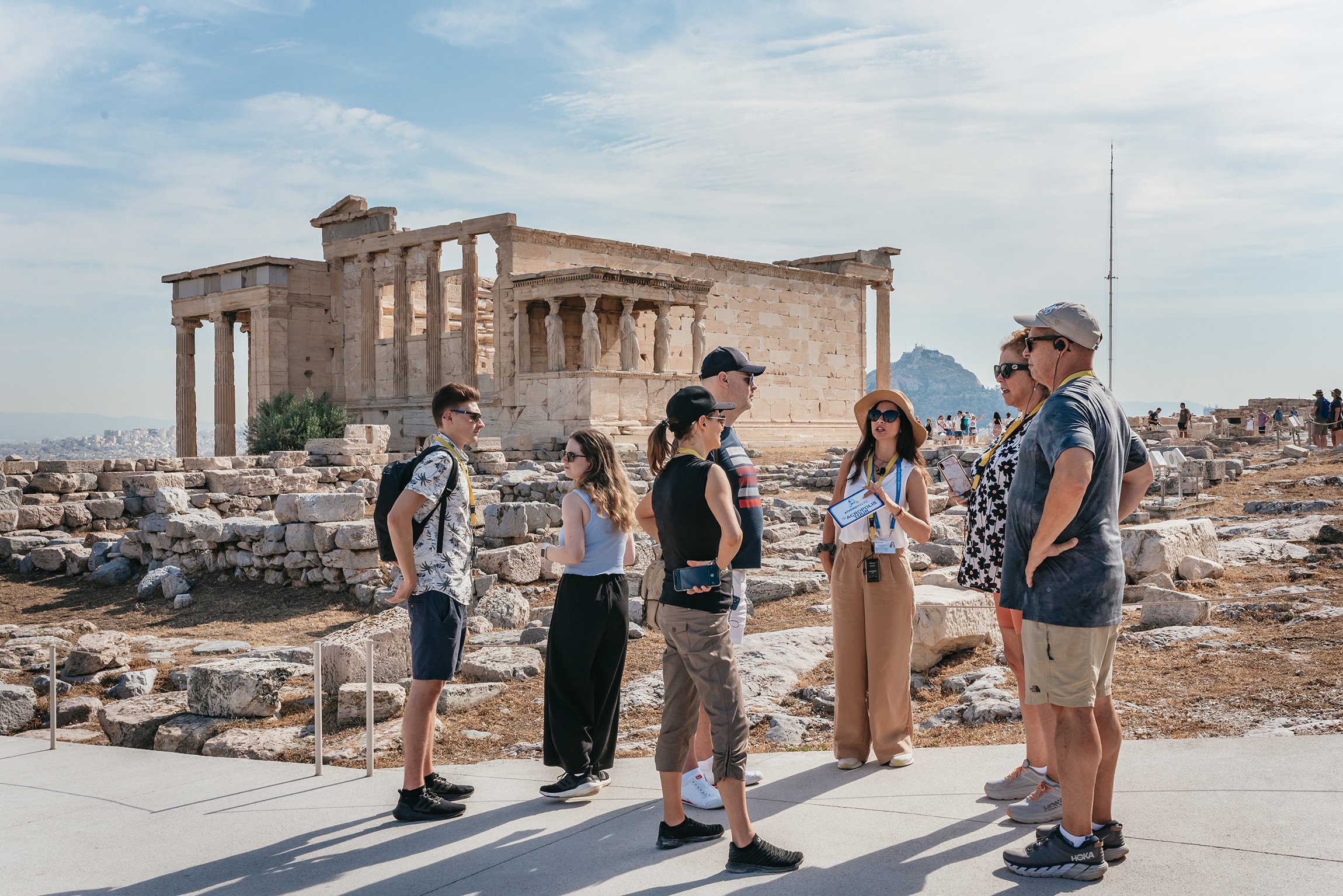
Athens: Acropolis, Parthenon & Acropolis Museum Guided Tour
An expert archaeologist guides you through the hilltop monuments of the Acropolis, including the Parthenon, and into the Acropolis Museum to see the surviving masterpieces up close.
 BEST VALUE
Athens: Acropolis Tour with Optional Acropolis Museum Upgrade
Climb the sacred rock with a licensed guide to explore the Parthenon and the monuments of the Acropolis, with the option to add the Acropolis Museum to your visit.
 SMALL GROUP
Athens: Acropolis and Mythology Highlights Small Group Tour
A small-group walk across the Acropolis that weaves the myths and legends of ancient Greece into the story of the Parthenon and the sacred rock above Athens.
 FIRST ACCESS
Athens: First Access Acropolis and Parthenon Guided Tour
Enter the Acropolis among the very first visitors of the day, before the crowds and the heat, for an unhurried guided tour of the Parthenon and the citadel.
 PARTHENON + MUSEUM
Athens: Parthenon, Acropolis and Museum Small Group Tour
A small-group tour combining the Parthenon and the monuments of the Acropolis with a guided visit to the Acropolis Museum and its original temple frieze.
The Complete Guide
Everything You Need to Know About the Parthenon
How Athena's temple was built and refined, what happened to its marbles, and how a licensed guide turns a roped-off ruin back into architecture.
Most visitors to the Acropolis of Athens come for one building. The Parthenon is the great marble temple on the summit of the sacred rock — and although the citadel holds the Propylaea, the Erechtheion, and the little Temple of Athena Nike, it is the Parthenon that has stood for nearly 2,500 years as the single most influential building in Western architecture. It was raised as the temple of Athena Parthenos (“Athena the Maiden”), the virgin patron goddess of the city, and its name comes from her epithet. The Acropolis was inscribed as a UNESCO World Heritage Site in 1987, but long before that the Parthenon had become a kind of universal measuring stick for proportion, balance, and the idea of classical beauty itself.
A Temple Built in Fifteen Years
The Parthenon you see was the centrepiece of the building programme launched by the statesman Pericles to rebuild the temples the Persians had burned in 480 BC. Construction began in 447 BC; the building was inaugurated in 438 BC, and its sculptural decoration was finished around 432 BC — an astonishing pace for a structure of this scale and refinement. Its architects were Iktinos and Kallikrates, working under the overall artistic direction of the sculptor Pheidias, the most celebrated artist of the age. It is built almost entirely of fine white Pentelic marble, quarried from Mount Pentelicus north-east of Athens, which weathers to the warm honey colour the temple takes on at sunset.
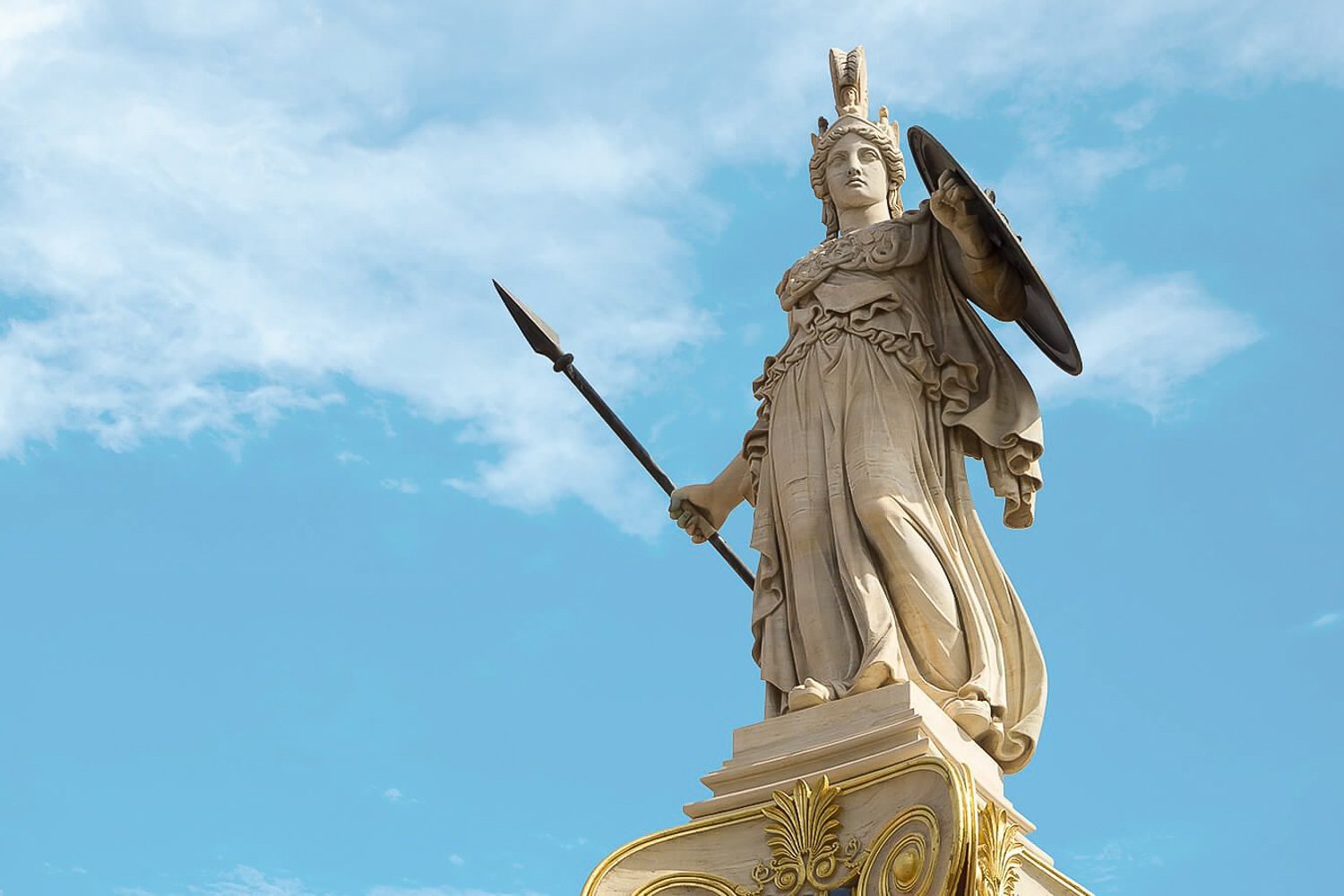
In plan it is a Doric peripteral temple — a rectangular chamber wrapped in a colonnade — and its column count is part of its fame: eight columns across each short end and seventeen down each long side (the canonical “8 × 17”). Inside the colonnade stood the cella, the inner room that once housed Pheidias’s lost masterpiece: a colossal statue of Athena some twelve metres high, made of gold and ivory over a wooden core, a technique the Greeks called chryselephantine.
The Stones Are Not Straight
The detail that astonishes people most on a good guided tour is that the Parthenon contains almost no straight lines. What reads to the eye as rigid geometry is in fact a web of deliberate, barely perceptible curves — the optical refinements that make the temple feel alive. The base platform, the stylobate, arches gently upward toward its centre rather than lying flat. The columns lean very slightly inward, so that if extended into the sky they would eventually meet. Each column swells a little at its midpoint — a subtle convex profile called entasis — and the corner columns are made fractionally thicker and set closer to their neighbours. Together these corrections counteract the distortions of human vision, so the building appears more perfectly regular than a truly regular building would. You cannot see this from a photograph; it takes someone standing beside you, pointing along the line of the steps, to reveal it.
A Carved Argument in Marble
The Parthenon was as much a sculpture gallery as a temple. Around the outside ran ninety-two metopes — square relief panels showing mythical battles, from gods against giants to Lapiths against centaurs. Higher and unusually for a Doric building, a continuous Ionic frieze about 160 metres long wound around the top of the inner chamber, depicting the great Panathenaic procession in honour of Athena. At each gable, a triangular pediment held a crowd of larger-than-life figures: the birth of Athena from the head of Zeus on the east, and her contest with Poseidon for the city on the west. A licensed guide spends much of the visit decoding these stories, because so few of the carvings remain in place — which is the Parthenon’s other great theme.
From Temple to Mosque to Ruin
The temple’s long afterlife is a story of conversions and one catastrophe. Around the 6th century AD it became a Christian church dedicated to the Virgin Mary; after the Ottoman conquest of Athens it was turned into a mosque, with a minaret rising beside the ancient columns. The single most destructive moment came on 26 September 1687, during a Venetian siege under Francesco Morosini: the Ottomans were using the Parthenon as a gunpowder magazine, a Venetian shell scored a direct hit, and the explosion blew out the centre of the building, collapsing the roof and much of the colonnade. Almost every ruin you see in the middle of the temple dates from that single afternoon.
The Marbles and the Empty Gallery
In the early 19th century, between roughly 1801 and 1812, Thomas Bruce, the 7th Earl of Elgin, removed about half of the Parthenon’s surviving sculptures and shipped them to Britain, where they were bought by the British Museum in 1816. Known both as the Elgin Marbles and, increasingly, the Parthenon Marbles, they remain in London — and Greece has campaigned for decades for their return. The argument has a powerful stage: the Acropolis Museum, opened on 20 June 2009 at the foot of the south slope. Its top-floor Parthenon Gallery is built to the exact dimensions and compass orientation of the temple itself, displaying the surviving original blocks of the frieze interleaved with stark white plaster casts of the pieces held abroad. The empty spaces are deliberate — a quiet, unmistakable case for reunification that almost every guide will walk you through.
Why See It With a Guide
You can buy a plain entry ticket and climb the rock alone, but the Parthenon is roped off — you admire it from the outside — the site has very little signage, and the marble is steep, crowded, and sun-baked. Without context it can read as a beautiful but silent ruin. A state-licensed local guide turns it back into architecture: the optical curves, the lost statue of Athena, the procession on the frieze, the explosion of 1687, the marbles in London. A skip-the-line guided tour also spares you the ticket-office queue, which on a summer morning can swallow an hour; everyone still passes a short security check at the gate, but you walk straight up. The operators behind these tours are independent, top-rated companies and certified guides, not the Greek state that owns the site — the signals that matter are high review counts, small groups, and free cancellation.
When you’re ready to stand before Athena’s temple with someone who can make every stone legible, check tour availability.
Guest Reviews
What Travelers Say
5/5
from 6340 verified guests
"My tour was very organized since the beggning. Our guide was Sofia, who guided very well and explained all the history to us. I trully recommend the guided tour."

"Vilma did a great job. We would highly recommend her to anyone going on a private tour. She was extremely knowledgable and was very friendly. Her background in archeology and art history was a valuable asset."
"Great experience start to finish. Meeting spot was clear and guides took time to make sure everyone in the group had arrived and had a working device. Our guide Myrto brought the site to life, adding historical context and detail throughout. Her tour of the museum deepened our understanding of the Acropolis. Highly recommend!"
"Everyone at the check-in point was friendly and our guide, Selina, was great. She gave the history of what we were seeing context and made it fun. Selina is so knowledgeable and the pace of the tour was just right. Definitely wear sneakers (and bring a hat if you're going in the summer months)."
Read all 6340 verified reviews
See All ReviewsSee the Parthenon the Easy Way
Skip the ticket queue and let a licensed local guide make the Parthenon legible — every column, metope, and pediment of Athena's temple — then see the original marbles in the Acropolis Museum. Free cancellation up to 24 hours before. Starting from $39 per person.
Check Availability & BookCan't Make These Dates?
Browse More Available Options
Find a tour that fits your schedule — all with instant confirmation and free cancellation.
Frequently Asked Questions About Acropolis & Parthenon Tours
Everything you need to know before booking a guided tour of Athens' UNESCO World Heritage citadel.
The Acropolis is the whole fortified hill above Athens and the group of ancient buildings on top of it. The Parthenon is the single most famous of those buildings — the great Doric temple of the goddess Athena, built between 447 and 432 BC. So every Parthenon visit is an Acropolis visit, but the Acropolis also includes the Propylaea gateway, the Erechtheion, and the Temple of Athena Nike.
The Acropolis is a steep, crowded, open-air site with very little explanatory signage, so much of its meaning isn't obvious on your own. A licensed local guide brings it to life — who built the Parthenon, why the Erechtheion has the Porch of the Caryatids, and how the site was a temple, a church, a mosque, and a gunpowder store over 2,500 years. A skip-the-line guided tour also gets you past the ticket queue. If you prefer to wander solo, a plain entry ticket is the budget alternative.
It gets you past the slowest bottleneck — the ticket-office queue, which on a summer morning can take an hour. Everyone, including tour groups, still passes a short bag and security check at the gate. Your guide handles the pre-arranged entry so you walk straight up.
A typical guided walk on the rock itself runs about two hours, after which you're usually free to linger for photos. If you add the Acropolis Museum, plan on three to four hours in total.
Yes, if you can. The Acropolis Museum opened in 2009 below the south slope and is regularly ranked among the best museums in the world. Its glass-walled top floor displays the Parthenon frieze at the exact size and orientation of the temple, and it's the home of the campaign for the return of the Parthenon Marbles. Many guided tours include it as a combined visit.
Spring and autumn are the most comfortable seasons. The site is open-air with almost no shade, and on summer afternoons it can hit the mid-30s°C — Greek authorities sometimes close it during the hottest hours on extreme-heat days. Aim for early morning right at opening, or the late afternoon and golden hour, when crowds thin and the marble turns honey-gold.
Yes. Several tours are timed to enter among the very first visitors of the day, before the largest crowds arrive and before the midday heat. These first-access tours are the most comfortable option in high summer and the best for unobstructed photos of the Parthenon.
Most guided tours meet at an agreed point near the entrance to the Acropolis in central Athens, so you make your own way there. Each listing on this page shows exactly where and when it meets — check the meeting point before you book.
No — the tours listed here are run by independent, top-rated local operators and state-licensed guides, not by the Greek authority that owns the site. That's the normal arrangement: the state sells site entry, while operators provide the guided experience and skip-the-line tickets. Trust signals to look for are high review counts, certified guides, small groups, and free cancellation.
The main route is a steady uphill climb over uneven, polished marble and natural rock that can be slippery, so wear proper shoes. There is a lift on the north side for visitors who cannot manage the steps, though it can be subject to availability. For specific accessibility needs, check the details of the individual tour before booking, as provisions vary by operator.
Comfortable non-slip shoes, a hat, sunglasses, sunscreen, and plenty of water — there's very little shade and the marble reflects the sun. There are fountains near the entrance to refill a bottle. If you're on a guided tour, the licensed guide and your skip-the-line entry are typically included; just bring your booking voucher on your phone.
They are a large portion of the Parthenon's original sculptures — including much of the frieze — that were removed in the early 19th century by Lord Elgin and are now in the British Museum in London. Greece has long campaigned for their return to the Acropolis Museum, which was purpose-built partly to display them. It's a debate most guides will mention on the tour.
Most tours on this page offer free cancellation up to 24 hours before the start time, along with instant confirmation and a mobile voucher. Always confirm the cancellation window on the specific tour before you book.
Still have questions? Email us at info@parthenonathenstour.com